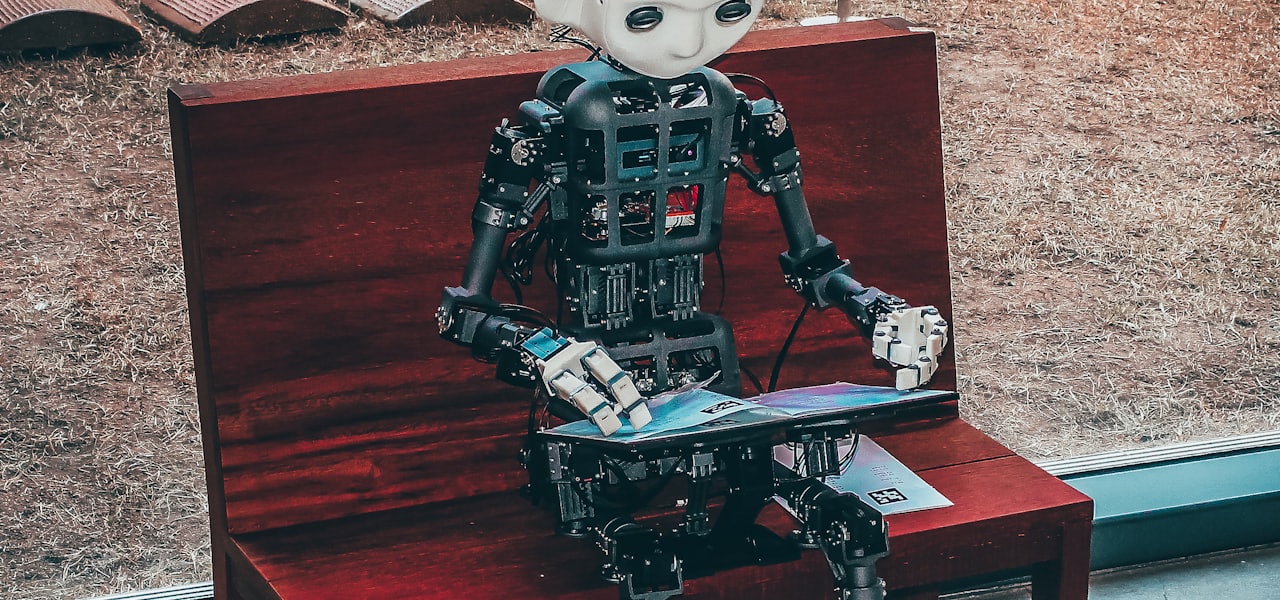
Electric Literature is an American literary magazine. == History == Founded by Andy Hunter and Scott Lindenbaum in 2009 as a print quarterly journal, Electric Literature transitioned to a daily website in 2012 under the helm of Halimah Marcus and Benjamin Samuel. Electric Literature publishes essays, reading lists, interviews, fiction, poetry, graphic narratives, humor, and book news, all available to read online for free without a paywall. It launched the first fiction magazine on the iPhone and iPad. Work published has been recognized by Best American Short Stories, Essays, Poetry, and Comics, the Pushcart Prize, Best Canadian Short Stories, The Best of the Small Presses, and the O. Henry Prize. in 2014, Electric Literature became a registered non-profit. In 2016, Halimah Marcus was appointed the first executive director of Electric Literature. She has been with the magazine since 2010. In 2021, Denne Michele Norris became editor-in-chief of Electric Literature, the first Black and openly trans editor-in-chief of a major U.S. literary publication. In 2022, Electric Literature was the Digital Prize Winner of the Whiting Literary Magazine Prizes. In 2023, Electric Literature partnered with Banned Books USA to offer free banned and challenged books to residents of Florida. In 2025, Electric Literature published their first book, edited by Norris and published by HarperOne: Both/And: Essays by Trans and Gender-Nonconforming Writers of Color. It builds on a prior essay series that Electric Literature sponsored for trans writers of color. Both/And became a finalist for the 2026 Lambda Literary Award for Transgender Nonfiction. == Recommended reading == In May 2012, Electric Literature launched Recommended Reading, a weekly fiction magazine. Each issue is curated by a well known editor or writer. == The Commuter == The Commuter, a weekly magazine for poetry, flash, graphic, or experimental narrative, debuted in January 2018, helmed by writer Kelly Luce.
Multisample anti-aliasing
Multisample anti-aliasing (MSAA) is a type of spatial anti-aliasing, a technique used in computer graphics to remove jaggies. It is an optimization of supersampling, where only the necessary parts are sampled more. Jaggies are only noticed in a small area, so the area is quickly found, and only that is anti-aliased. == Definition == The term generally refers to a special case of supersampling. Initial implementations of full-scene anti-aliasing (FSAA) worked conceptually by simply rendering a scene at a higher resolution, and then downsampling to a lower-resolution output. Most modern GPUs are capable of this form of anti-aliasing, but it greatly taxes resources such as texture, bandwidth, and fillrate. (If a program is highly TCL-bound or CPU-bound, supersampling can be used without much performance hit.) According to the OpenGL GL_ARB_multisample specification, "multisampling" refers to a specific optimization of supersampling. The specification dictates that the renderer evaluate the fragment program once per pixel, and only "truly" supersample the depth and stencil values. (This is not the same as supersampling but, by the OpenGL 1.5 specification, the definition had been updated to include fully supersampling implementations as well.) In graphics literature in general, "multisampling" refers to any special case of supersampling where some components of the final image are not fully supersampled. The lists below refer specifically to the ARB_multisample definition. == Description == In supersample anti-aliasing, multiple locations are sampled within every pixel, and each of those samples is fully rendered and combined with the others to produce the pixel that is ultimately displayed. This is computationally expensive, because the entire rendering process must be repeated for each sample location. It is also inefficient, as aliasing is typically only noticed in some parts of the image, such as the edges, whereas supersampling is performed for every single pixel. In multisample anti-aliasing, if any of the multi sample locations in a pixel is covered by the triangle being rendered, a shading computation must be performed for that triangle. However this calculation only needs to be performed once for the whole pixel regardless of how many sample positions are covered; the result of the shading calculation is simply applied to all of the relevant multi sample locations. In the case where only one triangle covers every multi sample location within the pixel, only one shading computation is performed, and these pixels are little more expensive than (and the result is no different from) the non-anti-aliased image. This is true of the middle of triangles, where aliasing is not an issue. (Edge detection can reduce this further by explicitly limiting the MSAA calculation to pixels whose samples involve multiple triangles, or triangles at multiple depths.) In the extreme case where each of the multi sample locations is covered by a different triangle, a different shading computation will be performed for each location and the results then combined to give the final pixel, and the result and computational expense are the same as in the equivalent supersampled image. The shading calculation is not the only operation that must be performed on a given pixel; multisampling implementations may variously sample other operations such as visibility at different sampling levels. == Advantages == The pixel shader usually only needs to be evaluated once per pixel for every triangle covering at least one sample point. The edges of polygons (the most obvious source of aliasing in 3D graphics) are anti-aliased. Since multiple subpixels per pixel are sampled, polygonal details smaller than one pixel that might have been missed without MSAA can be captured and made a part of the final rendered image if enough samples are taken. == Disadvantages == === Alpha testing === Alpha testing is a technique common to older video games used to render translucent objects by rejecting pixels from being written to the framebuffer. If the alpha value of a translucent fragment (pixel) is below a specified threshold, it will be discarded. Because this is performed on a pixel by pixel basis, the image does not receive the benefits of multi-sampling (all of the multisamples in a pixel are discarded based on the alpha test) for these pixels. The resulting image may contain aliasing along the edges of transparent objects or edges within textures, although the image quality will be no worse than it would be without any anti-aliasing. Translucent objects that are modelled using alpha-test textures will also be aliased due to alpha testing. This effect can be minimized by rendering objects with transparent textures multiple times, although this would result in a high performance reduction for scenes containing many transparent objects. === Aliasing === Because multi-sampling calculates interior polygon fragments only once per pixel, aliasing and other artifacts will still be visible inside rendered polygons where fragment shader output contains high frequency components. === Performance === While less performance-intensive than SSAA (supersampling), it is possible in certain scenarios (scenes heavy in complex fragments) for MSAA to be multiple times more intensive for a given frame than post processing anti-aliasing techniques such as FXAA, SMAA and MLAA. Early techniques in this category tend towards a lower performance impact, but suffer from accuracy problems. More recent post-processing based anti-aliasing techniques such as temporal anti-aliasing (TAA), which reduces aliasing by combining data from previously rendered frames, have seen the reversal of this trend, as post-processing AA becomes both more versatile and more expensive than MSAA, which cannot antialias an entire frame alone. == Sampling methods == === Point sampling === In a point-sampled mask, the coverage bit for each multisample is only set if the multisample is located inside the rendered primitive. Samples are never taken from outside a rendered primitive, so images produced using point-sampling will be geometrically correct, but filtering quality may be low because the proportion of bits set in the pixel's coverage mask may not be equal to the proportion of the pixel that is actually covered by the fragment in question. === Area sampling === Filtering quality can be improved by using area sampled masks. In this method, the number of bits set in a coverage mask for a pixel should be proportionate to the actual area coverage of the fragment. This will result in some coverage bits being set for multisamples that are not actually located within the rendered primitive, and can cause aliasing and other artifacts. == Sample patterns == === Regular grid === A regular grid sample pattern, where multisample locations form an evenly spaced grid throughout the pixel, is easy to implement and simplifies attribute evaluation (i.e. setting subpixel masks, sampling color and depth). This method is computationally expensive due to the large number of samples. Edge optimization is poor for screen-aligned edges, but image quality is good when the number of multisamples is large. === Sparse regular grid === A sparse regular grid sample pattern is a subset of samples that are chosen from the regular grid sample pattern. As with the regular grid, attribute evaluation is simplified due to regular spacing. The method is less computationally expensive due to having a fewer samples. Edge optimization is good for screen aligned edges, and image quality is good for a moderate number of multisamples. === Stochastic sample patterns === A stochastic sample pattern is a random distribution of multisamples throughout the pixel. The irregular spacing of samples makes attribute evaluation complicated. The method is cost efficient due to low sample count (compared to regular grid patterns). Edge optimization with this method, although sub-optimal for screen aligned edges. Image quality is excellent for a moderate number of samples. == Quality == Compared to supersampling, multisample anti-aliasing can provide similar quality at higher performance, or better quality for the same performance. Further improved results can be achieved by using rotated grid subpixel masks. The additional bandwidth required by multi-sampling is reasonably low if Z and colour compression are available. Most modern GPUs support 2×, 4×, and 8× MSAA samples. Higher values result in better quality, but are slower.
Federation of International Robot-soccer Association
The Federation of International Robot-soccer Association (FIRA) is an international organisation organising competitive soccer competitions between autonomous robots. The matches are usually five-a-side. == History == In 1996 and 1997, this competition was known as MiroSot and was held in Daejeon, Korea. The 1996 competition offered a challenging arena to the younger generation and researchers working with autonomous mobile robotic systems. From 1998 through 2008, it was called the FIRA Cup, and in 2009, it became the FIRA RoboWorld Cup & Congress. The 15th RoboWorld Cup was held at Amrita Vishwa Vidyapeetham, Bangalore, India in September 2010. In 2013, it took place in Kuala Lumpur, Malaysia. The championship started on August 24, 2013, and ended on August 29. At that time, it involved five categories: Micro-Robot Soccer Tournament, Amire, Naro, Simulated Robot, Android, Robo and Humanoid Robot. It attracted teams from Singapore, Indonesia, Taiwan, India, China, South Korea, the United Kingdom, Mexico, Canada, Russia and Malaysia. 80 teams from 11 countries participated. In 2018, the competition had 277 teams participating from 12 countries. === Past Events === == FIRA RoboWorld Cup & Congress == This competition has 4 leagues: FIRA AIR, FIRA Sports, FIRA Challenges, and FIRA Youth. Each league has its own competitions, and each competition can have several events. === FIRA AIR === The FIRA AIR league has two associated competitions, Autonomous Race and Emergency Service. === FIRA Sports === The FIRA Sports league has four associated competitions, HuroCup, RoboSot, SimuroSot, and AndroSot. This the robot soccer league. HuroCup consists of single events for bipedal humanoid robots. The events are: archery, sprint, marathon, united soccer, obstacle run, long jump, spartan race, marathon, weightlifting, and basketball. There is an all-round competition for the single robot that performs the best overall. === FIRA Challenges === The FIRA Challenges league has three associated competitions, Autonomous Cars, Autonomous Cars Simulation, Innovation and Business. === FIRA Youth === The FIRA Youth league has six associated challenges, Sport Robots, HuroCup Junior, CityRacer, DRV_Explorer, Cliff Hanger, and Mission Impossible.
A.I.s
A.I.s is a themed anthology of science fiction short works edited by American writers Jack Dann and Gardner Dozois. It was first published in paperback by Ace Books in December 2004. It was reissued as an ebook by Baen Books in June 2013. The book collects ten novelettes and short stories by various science fiction authors, together with a preface by the editors. == Contents == "Preface" (Jack Dann and Gardner Dozois) "Antibodies" (Charles Stross) "Trojan Horse" (Michael Swanwick) "Birth Day" (Robert Reed) "The Hydrogen Wall" (Gregory Benford) "The Turing Test" (Chris Beckett) "Dante Dreams" (Stephen Baxter) "The Names of All the Spirits" (J. R. Dunn) "From the Corner of My Eye" (Alexander Glass) "Halfjack" (Roger Zelazny) "Computer Virus" (Nancy Kress)
AI-assisted targeting in the Gaza Strip
As part of the Gaza war, the Israel Defense Forces (IDF) have used artificial intelligence to rapidly and automatically perform much of the process of determining what to bomb. Israel has greatly expanded the bombing of the Gaza Strip, which in previous wars had been limited by the Israeli Air Force running out of targets. These tools include the Gospel, an AI which automatically reviews surveillance data looking for buildings, equipment and people thought to belong to the enemy, and upon finding them, recommends bombing targets to a human analyst who may then decide whether to pass it along to the field. Another is Lavender, an "AI-powered database" which lists tens of thousands of Palestinian men linked by AI to Hamas or Palestinian Islamic Jihad, and which is also used for target recommendation. Critics have argued the use of these AI tools puts civilians at risk, blurs accountability, and results in militarily disproportionate violence in violation of international humanitarian law. == The Gospel == Israel uses an AI system dubbed "Habsora", "the Gospel", to determine which targets the Israeli Air Force would bomb. It automatically provides a targeting recommendation to a human analyst, who decides whether to pass it along to soldiers in the field. The recommendations can be anything from individual fighters, rocket launchers, Hamas command posts, to private homes of suspected Hamas or Islamic Jihad members. AI can process military intelligence far faster than humans. Retired Lt Gen. Aviv Kohavi, head of the IDF until 2023, stated that the system could produce 100 bombing targets in Gaza a day, with real-time recommendations which ones to attack, where human analysts might produce 50 a year. A lecturer interviewed by NPR estimated these figures as 50–100 targets in 300 days for 20 intelligence officers, and 200 targets within 10–12 days for the Gospel. === Technological background === The Gospel uses machine learning, where an AI is tasked with identifying commonalities in vast amounts of data (e.g. scans of cancerous tissue, photos of a facial expression, surveillance of Hamas members identified by human analysts), then looking for those commonalities in new material. What information the Gospel uses is not known, but it is thought to combine surveillance data from diverse sources in enormous amounts. Recommendations are based on pattern-matching. A person with enough similarities to other people labeled as enemy combatants may be labelled a combatant themselves. Regarding the suitability of AIs for the task, NPR cited Heidy Khlaaf, engineering director of AI Assurance at the technology security firm Trail of Bits, as saying "AI algorithms are notoriously flawed with high error rates observed across applications that require precision, accuracy, and safety." Bianca Baggiarini, lecturer at the Australian National University's Strategic and Defence Studies Centre wrote AIs are "more effective in predictable environments where concepts are objective, reasonably stable, and internally consistent." She contrasted this with telling the difference between a combatant and non-combatant, which even humans frequently can't do. Khlaaf went on to point out that such a system's decisions depend entirely on the data it's trained on, and are not based on reasoning, factual evidence or causation, but solely on statistical probability. === Operation === The IAF ran out of targets to strike in the 2014 war and 2021 crisis. In an interview on France 24, investigative journalist Yuval Abraham of +972 Magazine stated that to maintain military pressure, and due to political pressure to continue the war, the military would bomb the same places twice. Since then, the integration of AI tools has significantly sped up the selection of targets. In early November, the IDF stated more than 12,000 targets in Gaza had been identified by the target administration division that uses the Gospel. NPR wrote on December 14 that it was unclear how many targets from the Gospel had been acted upon, but that the Israeli military said it was currently striking as many as 250 targets a day. The bombing, too, has intensified to what the December 14 article called an astonishing pace: the Israeli military stated at the time it had struck more than 22,000 targets inside Gaza, at a daily rate more than double that of the 2021 conflict, more than 3,500 of them since the collapse of the truce on December 1. Early in the offensive the head of the Air Force stated his forces only struck military targets, but added: "We are not being surgical." Once a recommendation is accepted, another AI, Fire Factory, cuts assembling the attack down from hours to minutes by calculating munition loads, prioritizing and assigning targets to aircraft and drones, and proposing a schedule, according to a pre-war Bloomberg article that described such AI tools as tailored for a military confrontation and proxy war with Iran. One change that The Guardian noted is that since senior Hamas leaders disappear into tunnels at the start of an offensive, systems such as the Gospel have allowed the IDF to locate and attack a much larger pool of more junior Hamas operatives. It cited an official who worked on targeting decisions in previous Gaza operations as saying that while the homes of junior Hamas members had previously not been targeted for bombing, the official believes the houses of suspected Hamas operatives were now targeted regardless of rank. In the France 24 interview, Abraham, of +972 Magazine, characterized this as enabling the systematization of dropping a 2000 lb bomb into a home to kill one person and everybody around them, something that had previously been done to a very small group of senior Hamas leaders. NPR cited a report by +972 Magazine and its sister publication Local Call as asserting the system is being used to manufacture targets so that Israeli military forces can continue to bombard Gaza at an enormous rate, punishing the general Palestinian population. NPR noted it had not verified this; it was unclear how many targets are being generated by AI alone, but there had been a substantial increase in targeting, with an enormous civilian toll. In principle, the combination of a computer's speed to identify opportunities and a human's judgment to evaluate them can enable more precise attacks and fewer civilian casualties. Israeli military and media have emphasized this capacity to minimize harm to non-combatants. Richard Moyes, researcher and head of the NGO Article 36, pointed to "the widespread flattening of an urban area with heavy explosive weapons" to question these claims, while Lucy Suchman, professor emeritus at Lancaster University, described the bombing as "aimed at maximum devastation of the Gaza Strip". The Guardian wrote that when a strike was authorized on private homes of those identified as Hamas or Islamic Jihad operatives, target researchers knew in advance the expected number of civilians killed, each target had a file containing a collateral damage score stipulating how many civilians were likely to be killed in a strike, and according to a senior Israeli military source, operatives use a "very accurate" measurement of the rate of civilians evacuating a building shortly before a strike. "We use an algorithm to evaluate how many civilians are remaining. It gives us a green, yellow, red, like a traffic signal." ==== 2021 use ==== Kohavi compared the target division using the Gospel to a machine and stated that once the machine was activated in the war of May 2021, it generated 100 targets a day, with half of them being attacked, in contrast with 50 targets in Gaza per year beforehand. Approximately 200 targets came from the Gospel out of the 1,500 targets Israel struck in Gaza in the war, including both static and moving targets according to the military. The Jewish Institute for National Security of America's after action report identified an issue, stating the system had data on what was a target, but lacked data on what wasn't. The system depends entirely on training data, and intel that human analysts had examined and deemed didn't constitute a target had been discarded, risking bias. The vice president expressed his hopes this had since been rectified. === Organization === The Gospel is used by the military's target administration division (or Directorate of Targets or Targeting Directorate), which was formed in 2019 in the IDF's intelligence directorate to address the air force running out of targets to bomb, and which Kohavi described as "powered by AI capabilities" and including hundreds of officers of soldiers. In addition to its wartime role, The Guardian wrote it'd helped the IDF build a database of between 30,000 and 40,000 suspected militants in recent years, and that systems such as the Gospel had played a critical role in building lists of individuals authorized to be assassinated. The Gospel was developed by Unit 8200 of the Israeli Intelligence C
Word error rate
Word error rate (WER) is a common metric of the performance of a speech recognition or machine translation system. The WER metric typically ranges from 0 to 1, where 0 indicates that the compared pieces of text are exactly identical, and 1 (or larger) indicates that they are completely different with no similarity. This way, a WER of 0.8 means that there is an 80% error rate for compared sentences. The general difficulty of measuring performance lies in the fact that the recognized word sequence can have a different length from the reference word sequence (supposedly the correct one). The WER is derived from the Levenshtein distance, working at the word level instead of the phoneme level. The WER is a valuable tool for comparing different systems as well as for evaluating improvements within one system. This kind of measurement, however, provides no details on the nature of translation errors and further work is therefore required to identify the main source(s) of error and to focus any research effort. This problem is solved by first aligning the recognized word sequence with the reference (spoken) word sequence using dynamic string alignment. Examination of this issue is seen through a theory called the power law that states the correlation between perplexity and word error rate. Word error rate can then be computed as: W E R = S + D + I N = S + D + I S + D + C {\displaystyle {\mathit {WER}}={\frac {S+D+I}{N}}={\frac {S+D+I}{S+D+C}}} where S is the number of substitutions, D is the number of deletions, I is the number of insertions, C is the number of correct words, N is the number of words in the reference (N=S+D+C) The intuition behind 'deletion' and 'insertion' is how to get from the reference to the hypothesis. So if we have the reference "This is wikipedia" and hypothesis "This _ wikipedia", we call it a deletion. Note that since N is the number of words in the reference, the word error rate can be larger than 1.0, namely if the number of insertions I is larger than the number of correct words C. When reporting the performance of a speech recognition system, sometimes word accuracy (WAcc) is used instead: W A c c = 1 − W E R = N − S − D − I N = C − I N {\displaystyle {\mathit {WAcc}}=1-{\mathit {WER}}={\frac {N-S-D-I}{N}}={\frac {C-I}{N}}} Since the WER can be larger than 1.0, the word accuracy can be smaller than 0.0. == Experiments == It is commonly believed that a lower word error rate shows superior accuracy in recognition of speech, compared with a higher word error rate. However, at least one study has shown that this may not be true. In a Microsoft Research experiment, it was shown that, if people were trained under "that matches the optimization objective for understanding", (Wang, Acero and Chelba, 2003) they would show a higher accuracy in understanding of language than other people who demonstrated a lower word error rate, showing that true understanding of spoken language relies on more than just high word recognition accuracy. == Other metrics == One problem with using a generic formula such as the one above, however, is that no account is taken of the effect that different types of error may have on the likelihood of successful outcome, e.g. some errors may be more disruptive than others and some may be corrected more easily than others. These factors are likely to be specific to the syntax being tested. A further problem is that, even with the best alignment, the formula cannot distinguish a substitution error from a combined deletion plus insertion error. Hunt (1990) has proposed the use of a weighted measure of performance accuracy where errors of substitution are weighted at unity but errors of deletion and insertion are both weighted only at 0.5, thus: W E R = S + 0.5 D + 0.5 I N {\displaystyle {\mathit {WER}}={\frac {S+0.5D+0.5I}{N}}} There is some debate, however, as to whether Hunt's formula may properly be used to assess the performance of a single system, as it was developed as a means of comparing more fairly competing candidate systems. A further complication is added by whether a given syntax allows for error correction and, if it does, how easy that process is for the user. There is thus some merit to the argument that performance metrics should be developed to suit the particular system being measured. Whichever metric is used, however, one major theoretical problem in assessing the performance of a system is deciding whether a word has been “mis-pronounced,” i.e. does the fault lie with the user or with the recogniser. This may be particularly relevant in a system which is designed to cope with non-native speakers of a given language or with strong regional accents. The pace at which words should be spoken during the measurement process is also a source of variability between subjects, as is the need for subjects to rest or take a breath. All such factors may need to be controlled in some way. For text dictation it is generally agreed that performance accuracy at a rate below 95% is not acceptable, but this again may be syntax and/or domain specific, e.g. whether there is time pressure on users to complete the task, whether there are alternative methods of completion, and so on. The term "Single Word Error Rate" is sometimes referred to as the percentage of incorrect recognitions for each different word in the system vocabulary. == Edit distance == The word error rate may also be referred to as the length normalized edit distance. The normalized edit distance between X and Y, d( X, Y ) is defined as the minimum of W( P ) / L ( P ), where P is an editing path between X and Y, W ( P ) is the sum of the weights of the elementary edit operations of P, and L(P) is the number of these operations (length of P).
AAAI Conference on Artificial Intelligence
The AAAI Conference on Artificial Intelligence is a leading international academic conference in artificial intelligence held annually. It ranks 4th in terms of H5 Index in Google Scholar's list of top AI publications, after ICLR, NeurIPS, and ICML. It is supported by the Association for the Advancement of Artificial Intelligence (AAAI), after which it is named. Precise dates vary from year to year, but paper submissions are generally due at the end of August to beginning of September, and the conference is generally held during the following February. The first AAAI was held in 1980 at Stanford University, Stanford California. During AAAI-20 conference, AI pioneers and 2018 Turing Award winners (often referred to as the Nobel Prize of Computing) Yann LeCun and Yoshua Bengio, among eight other researchers, were honored as the AAAI 2020 Fellows. Along with other conferences such as NeurIPS and ICML, AAAI uses an artificial-intelligence algorithm to assign papers to reviewers. == Sponsors == Many leading technology companies, including Google, Microsoft, Amazon (company), IBM, Baidu, Bytedance, and Huawei, generously sponsor and participate in AAAI to publish and showcase their latest theoretical and applied research. Sponsoring companies also actively recruit AI talents at the conference. == Locations == AAAI-2026 Singapore Expo, Singapore AAAI-2025 Pennsylvania Convention Center, Philadelphia, Pennsylvania, United States AAAI-2024 Vancouver Convention Centre, Vancouver, British Columbia, Canada AAAI-2023 Washington Convention Center, Washington, D.C., United States AAAI-2022 Virtual Conference AAAI-2021 Virtual Conference AAAI-2020 Hilton New York Midtown, New York, New York, United States AAAI-2019 Hilton Hawaiian Village, Honolulu, Hawaii, United States AAAI-2018 Hilton New Orleans Riverside, New Orleans, Louisiana, United States AAAI-2017 San Francisco, California, United States AAAI-2016 Phoenix, Arizona, United States AAAI-2015 Austin, Texas, United States AAAI-2014 Québec Convention Center, Québec City, Québec, Canada AAAI-2013 Bellevue, Washington, United States AAAI-2012 Toronto, Ontario, Canada AAAI-2011 San Francisco, California, United States AAAI-2010 Westin Peachtree Plaza, Atlanta, Georgia, United States AAAI-2008 Chicago, Illinois, United States AAAI-2007 Toronto, Ontario, Canada AAAI-2006 Boston, Massachusetts, United States AAAI-2005 Pittsburgh, Pennsylvania, United States AAAI-2004 San Jose, California, United States AAAI-2002 Shaw conference center in Edmonton, Alberta, Canada AAAI-2000 Austin, Texas, United States AAAI-1999 Orlando, Florida, United States AAAI-1998 Madison, Wisconsin, United States AAAI-1997 Providence, Rhode Island, United States AAAI-1996 Portland, Oregon, United States AAAI-1994 Seattle, Washington, United States AAAI-1993 Washington Convention Center, Washington, D.C., United States AAAI-1992 San Jose Convention Center, San Jose, California, United States AAAI-1991 Anaheim Convention Center, Anaheim, California, United States AAAI-1990 Boston, Massachusetts, United States AAAI-1988 Saint Paul, Minnesota, United States AAAI-1987 Seattle, Washington, United States AAAI-1986 Philadelphia, Pennsylvania, United States AAAI-1984 University of Texas, Austin, Texas, United States AAAI-1983 Washington, D.C., United States AAAI-1982 Carnegie Mellon University and the University of Pittsburgh, Pittsburgh, Pennsylvania, United States AAAI-1980 Stanford, California, United States